
How to Check IPO Allotment Status Online in India (2025 Guide)
By IPO Plus
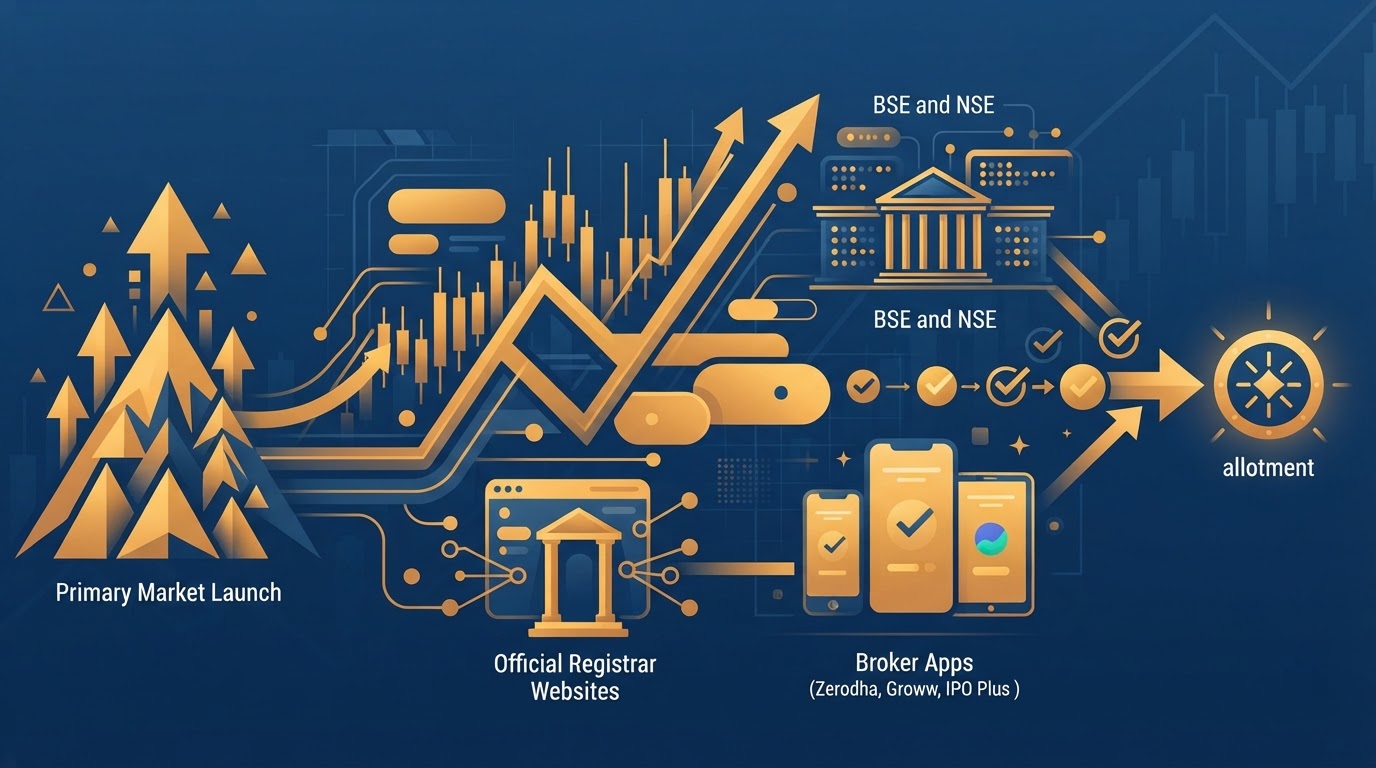
Learn how to check IPO allotment status online in India via registrar sites, BSE/NSE tools, and broker apps like Zerodha, Groww, and IPO Plus in 2025.
How to Check IPO Allotment Status Online in India (2025 Guide)
Key Takeaways
- IPO allotment status can be checked online through the registrar's website (Link Intime or KFin Technologies), BSE/NSE tools, or broker apps like Zerodha, Groww, and Upstox.
- Allotment status is usually finalised one to two working days after the IPO subscription closes and before the listing date.
- PAN, application number, or DP Client ID is required to check allotment status on any registrar or exchange platform.
- If shares are not allotted, ASBA-blocked funds are released automatically within one to two working days without a manual refund request.
- IPO Plus allows investors to track allotment status alongside live subscription numbers, grey-market premium, and broker reviews in one place.
What Is IPO Allotment Status and Why Does It Matter?
How Does the IPO Allotment Process Work?
IPO allotment status tells an investor whether the shares they applied for in an initial public offering have actually been credited to their demat account. Knowing how to check IPO allotment status online saves time, avoids confusion around refunds, and confirms whether an investor can start trading once the stock lists on the exchange.
The allotment process begins after the IPO subscription window closes. The registrar, working with SEBI's allotment rules, matches the total shares on offer against the number of valid applications received in each investor category — retail, HNI, and QIB. If an IPO is oversubscribed, allotment is typically done through a computerised lottery system for retail investors, while proportionate allotment applies to institutional and non-institutional categories.
When Is IPO Allotment Status Usually Released?
IPO allotment status is usually released one to two working days after the IPO subscription period ends, and typically before the listing date. For example, if an IPO closes on a Wednesday, the allotment is often finalised by Friday, with listing following on the following Monday or Tuesday. Exact timelines are published in each IPO's official prospectus and on the registrar's website.
If an investor is not allotted shares, the blocked amount under the ASBA (Application Supported by Blocked Amount) process is unblocked automatically, usually within one to two working days of the allotment finalisation. No shares are credited to the demat account in this case, and the investor is free to apply for the next available IPO without any pending refund formalities.
What Happens If You Are Not Allotted Shares?
How to Check IPO Allotment Status on the Registrar's Website
How to Check Allotment Status via Link Intime?
The most direct way to check IPO allotment status online is through the official website of the IPO's registrar, since registrars are the entities SEBI appoints to process and finalise allotments. Every IPO prospectus names its registrar, and the two most common registrars in the Indian market are Link Intime India and KFin Technologies.
To check allotment status via Link Intime, visit linkintime.co.in, navigate to the 'IPO Allotment Status' section, select the specific IPO company name from the dropdown list, and enter either your PAN, application number, or DP Client ID along with the captcha code. The result appears instantly, showing the number of shares applied for versus shares allotted.
How to Check Allotment Status via KFin Technologies?
To check allotment status via KFin Technologies, visit kfintech.com, click on 'Investor Services' and then 'IPO Allotment Status,' select the relevant IPO from the list, and submit your PAN or application number. KFin Technologies handles allotment for a large share of both mainboard and SME IPOs, so investors should confirm which registrar is assigned before searching.
Most registrar websites require at least one of three identifiers: your PAN card number, the IPO application number generated at the time of bidding, or your DP Client ID (demat account identification number). PAN is the most reliable option since it is unique to each investor and does not depend on retrieving a receipt or SMS confirmation from the bidding stage.
What Details Do You Need (PAN, Application Number, DP Client ID)?
How to Check IPO Allotment Status via BSE and NSE
How to Use the BSE IPO Allotment Status Tool?
Investors can also check IPO allotment status online directly through the stock exchanges, since both BSE and NSE host free allotment-status tools that pull data from the registrar in real time. This option is useful when a registrar's website is slow or facing heavy traffic near allotment day.
To use the BSE IPO allotment status tool, go to bseindia.com, select 'Investors' and then 'IPO Allotment Status,' choose 'Equity' as the issue type, select the IPO name, and enter your application number and PAN. The system displays whether shares were allotted along with the quantity, without requiring any login or registration.
How to Use the NSE IPO Allotment Status Tool?
To use the NSE IPO allotment status tool, visit nseindia.com, go to the 'IPO' section under 'Products,' click on 'IPO Bids/Allotment Status,' select the IPO company, and enter your PAN along with the application number. NSE's tool works well for IPOs listed exclusively or dually on the exchange and is often faster to load during peak-traffic periods right after allotment.
Choosing between BSE and NSE largely depends on which exchange the specific IPO is listed on and which platform loads faster on allotment day. Since most Indian IPOs list on both exchanges simultaneously, either tool should return the same allotment result; investors can simply try whichever exchange's website responds quicker.
BSE vs NSE: Which Should You Use?
How to Check IPO Allotment Status Using Your Broker App
Checking Allotment Status on Zerodha, Groww, and Upstox
Broker apps offer one of the fastest ways to check IPO allotment status online because they sync directly with the applicant's application history and demat holdings. Once allotment is finalised, most broking platforms send a push notification or email confirming the result.
On Zerodha, allotment status appears under the 'Console' dashboard in the 'Portfolio' or 'IPO' tab, showing applied quantity versus allotted quantity for each IPO. On Groww, investors can check status under the 'IPO' section by tapping on the specific issue and viewing 'Application Status.' On Upstox, the allotment result is visible under 'Orders' and then 'IPO,' where the app pulls live data from the registrar's records.
How to Check IPO Allotment Status on IPO Plus?
IPO Plus lets investors track allotment status alongside real-time subscription data, grey-market premium trends, and broker reviews on a single screen, making it easier to compare an IPO's performance before and after allotment. Investors can search the IPO by name on IPO Plus, view the latest subscription figures across retail, HNI, and QIB categories, and cross-check GMP movement to gauge likely listing gains once shares are allotted.
If a broker app shows no update on allotment day, the most likely cause is a delay in the registrar syncing data with the broker's backend systems rather than an issue with the application itself. In such cases, investors should directly check the registrar's website (Link Intime or KFin Technologies) or the BSE/NSE allotment tools, since these primary sources are always updated first.
What to Do If Your Broker App Shows No Update?
What to Do After Checking Your IPO Allotment Status
What Happens If Shares Are Allotted?
What happens next depends entirely on whether an investor's IPO allotment status shows shares credited or not; allotted shares move to the demat account before listing, while unsuccessful applications trigger an automatic fund release. Understanding both paths helps investors act quickly instead of waiting anxiously for updates.
If shares are allotted, they are credited to the investor's demat account, typically one day before the listing date. Investors can then decide whether to sell on listing day for potential listing gains or hold the stock for the long term; either way, the shares appear directly in the demat holdings and no manual claim process is required.
How to Get a Refund If Not Allotted?
If no shares are allotted, the refund is processed automatically since IPO applications use the ASBA mechanism, which only blocks funds in the investor's bank account rather than debiting them upfront. The blocked amount is released back to the same bank account, usually within one to two working days of allotment finalisation, without any separate refund request needed.
If an investor sees a discrepancy — such as applying for shares but seeing no record on the registrar's website, or a mismatch between applied and allotted quantities that doesn't match SEBI's allotment ratio — the first step is to contact the registrar's investor grievance cell listed on their website. If the issue remains unresolved, investors can escalate through the SEBI SCORES portal (scores.gov.in) or contact their broker's customer support with the application reference number for further investigation.
What If There's a Discrepancy in Allotment?
Frequently Asked Questions
How can I check my IPO allotment status online?
You can check IPO allotment status online through the registrar's website (Link Intime or KFin Technologies), the BSE or NSE allotment tools, or directly on your broker's app using your PAN, application number, or DP Client ID.
When is IPO allotment status usually announced?
IPO allotment status is typically announced one to two working days after the subscription period closes, generally just before the stock's listing date.
What documents do I need to check IPO allotment status?
You need at least one of the following: your PAN card number, IPO application number, or DP Client ID, along with the captcha code shown on the registrar's or exchange's website.
Which registrars handle most IPO allotments in India?
Link Intime India and KFin Technologies are the two registrars that handle the majority of mainboard and SME IPO allotments in India.
What happens if I am not allotted IPO shares?
If you are not allotted shares, the funds blocked under ASBA are automatically released back to your bank account, usually within one to two working days of allotment finalisation.
Can I check IPO allotment status without a PAN card?
Yes, most registrar and exchange tools also accept your application number or DP Client ID as an alternative to PAN for checking allotment status.
Does IPO Plus show allotment status along with subscription data?
IPO Plus lets investors track allotment status alongside live subscription figures, grey-market premium trends, and broker reviews for each IPO on a single platform.